About Artificial Intelligence
Artificial Intelligence (AI) refers to the simulation of human intelligence in machines programmed to think and learn like humans. It encompasses a variety of technologies and methodologies that enable computers to perform tasks that typically require human intelligence.
Key Components of AI
- Machine Learning: Algorithms that allow computers to learn from and make predictions based on data.
- Natural Language Processing (NLP): Enables machines to understand and interpret human language.
- Computer Vision: Allows machines to interpret and process visual data from the world.
- Robotics: The design and use of robots to perform tasks autonomously or semi-autonomously.
Applications of AI in Industry
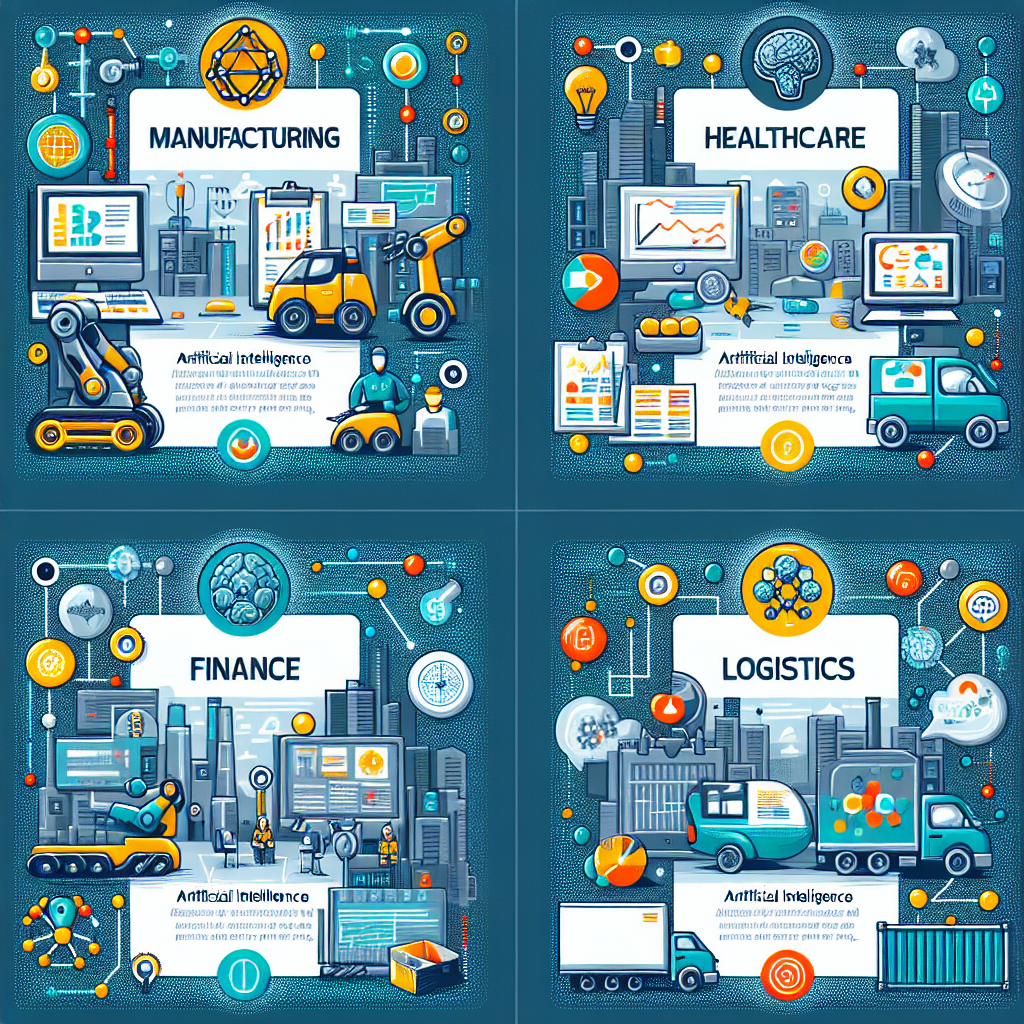
AI is revolutionizing various industries by enhancing efficiency and productivity. Here are some notable applications:
- Manufacturing: AI is used for predictive maintenance, quality control, and optimizing production processes.
- Healthcare: AI assists in diagnostics, personalized medicine, and administrative tasks.
- Finance: AI algorithms are employed for fraud detection, risk management, and algorithmic trading.
- Logistics: AI optimizes supply chain management, route planning, and inventory management.
Conclusion
The integration of AI into industrial processes is not just a trend; it is a fundamental shift in how industries operate. As technology continues to evolve, the potential for AI to drive innovation and efficiency will only grow.